Monday, August 13, 2012
High Maintenance Guests
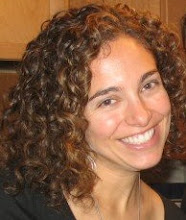
Four and a half years ago I eliminated gluten from my diet. Going gluten-free was a bit of a challenge at first, but in time with reframed dietary parameters I easily adapted to my new diet. The aspect that continues to be challenging is how to tell hosts about my eating practices, so I came up with some practical pieces of advice for hosting "high maintenance" guests. Read all about it in my post on The Jew and the Carrot.

Thursday, August 2, 2012
How Bout Them Apples?
An Apple A Day: The Myths, Misconceptions, and Truths About the Foods We Eat
by Joe Schwarcz
354 pp. Other Press. 2009
The title was appealing enough (no pun intended). Last year a nutrition friend of mine was reading this book and I was curious about it. Myths? Misconceptions? Truths? Count me in. About midway through the book I wanted to count myself out. But I stuck with it, despite reading the author's introductory disclaimer on page three: "Chances are that most of you will be as picky with this book as you are with your food." Indeed.
An Apple A Day is divided into four sections, each looking at hot science topics in food. "Part One: Naturally Occurring Substances in Our Food Supply" primarily examines the claims around phytonutrients, such as antioxidants and other bioactive compounds that have been isolated in research and touted for their health benefits. It's like taking a tour of Super Supplements and asking whether any of the supplements are worth the investment. Presented in the proper format, this section has the potential to be very insightful. Perhaps because I spent several months studying bioactive compounds during grad school or the fact that the book is now three years old and already feels dated, but I found this section to be lackluster. After nearly every chapter he comes to the same conclusion: phytonutrients have potential to be miracle substances but lack conclusive evidence to back up their claims. Many of these compounds (resveratrol! lycopene! sulforaphane! lutein!) likely rely on a specific synergy that can only be achieved through the entire food matrix. Incorporate whole foods into your diet and cover all your bases. I agree with his bottom line and just saved you from reading the first 150 or so pages of the book.
In "Part Two: Manipulating Our Food Supply," Schwarcz looks at additives like MSG, natural and artificial sweeteners, nitrates, food coloring and GMOs. In each he mentions (but doesn't cite) research debunking the "alarmist" claims made against these substances. He goes even further in "Part Three: Contaminants in Our food Supply" where he finds no convincing health concerns regarding pesticide use, hormones, and endocrine disruptors in the research. His conclusions are weak concessions. On the issue of BPA he wonders why we're considering banning a substance that is only theoretically harmful when both cigarettes and alcohol lead are known to kill millions of people theoretically. He hesitates to tell people to only buy organic produce or wild fish because they are expensive and eating conventional apples or farmed salmon certainly outweighs the potential harm of pesticides or PCBs. There is a certain truth to these arguments but the problem is that they justify the status quo rather than rely upon emerging science to stir a change to the food system system so that we wouldn't have to choose the lesser of two evils to incorporate into our diets.
Lest you wonder, Joe Schwarcz has a PhD and has some serious academic cred as the director of McGill University's Office of Science and Society. Which is why I was confounded when the 330+ page book contained no footnotes. Where are the citations for all the studies he refers to? In Kessler's book there were over 100 pages of references alone (just one of the reasons that it was a faster read). Schwarcz's tones is uneven and changes over the course of the book, from light and curious in the Part One to more neutral and probing in Part Two, growing more conservative in Part Three to downright cynical and dismissive in "Part Four: Tough to Swallow," a section that discusses kosher diets, detox diets, goji juice and green tea and seemed more like a miscellaneous addendum to the book.
By the end of the book I was looking for something redemptive about the whole experience. I found it in the three page conclusion, which could be further whittled down to this clumsy sentence:
Sound familiar? It's yet another iteration of Michael Pollan's Eat Food. Mostly Plants. Not too Much. If healthy eating is so simple, why is it so hard for people? Now that's a book I'd like to read.
by Joe Schwarcz
354 pp. Other Press. 2009
 |
| The key to perfect health? Click here for photo source. |
The title was appealing enough (no pun intended). Last year a nutrition friend of mine was reading this book and I was curious about it. Myths? Misconceptions? Truths? Count me in. About midway through the book I wanted to count myself out. But I stuck with it, despite reading the author's introductory disclaimer on page three: "Chances are that most of you will be as picky with this book as you are with your food." Indeed.
An Apple A Day is divided into four sections, each looking at hot science topics in food. "Part One: Naturally Occurring Substances in Our Food Supply" primarily examines the claims around phytonutrients, such as antioxidants and other bioactive compounds that have been isolated in research and touted for their health benefits. It's like taking a tour of Super Supplements and asking whether any of the supplements are worth the investment. Presented in the proper format, this section has the potential to be very insightful. Perhaps because I spent several months studying bioactive compounds during grad school or the fact that the book is now three years old and already feels dated, but I found this section to be lackluster. After nearly every chapter he comes to the same conclusion: phytonutrients have potential to be miracle substances but lack conclusive evidence to back up their claims. Many of these compounds (resveratrol! lycopene! sulforaphane! lutein!) likely rely on a specific synergy that can only be achieved through the entire food matrix. Incorporate whole foods into your diet and cover all your bases. I agree with his bottom line and just saved you from reading the first 150 or so pages of the book.
In "Part Two: Manipulating Our Food Supply," Schwarcz looks at additives like MSG, natural and artificial sweeteners, nitrates, food coloring and GMOs. In each he mentions (but doesn't cite) research debunking the "alarmist" claims made against these substances. He goes even further in "Part Three: Contaminants in Our food Supply" where he finds no convincing health concerns regarding pesticide use, hormones, and endocrine disruptors in the research. His conclusions are weak concessions. On the issue of BPA he wonders why we're considering banning a substance that is only theoretically harmful when both cigarettes and alcohol lead are known to kill millions of people theoretically. He hesitates to tell people to only buy organic produce or wild fish because they are expensive and eating conventional apples or farmed salmon certainly outweighs the potential harm of pesticides or PCBs. There is a certain truth to these arguments but the problem is that they justify the status quo rather than rely upon emerging science to stir a change to the food system system so that we wouldn't have to choose the lesser of two evils to incorporate into our diets.
Lest you wonder, Joe Schwarcz has a PhD and has some serious academic cred as the director of McGill University's Office of Science and Society. Which is why I was confounded when the 330+ page book contained no footnotes. Where are the citations for all the studies he refers to? In Kessler's book there were over 100 pages of references alone (just one of the reasons that it was a faster read). Schwarcz's tones is uneven and changes over the course of the book, from light and curious in the Part One to more neutral and probing in Part Two, growing more conservative in Part Three to downright cynical and dismissive in "Part Four: Tough to Swallow," a section that discusses kosher diets, detox diets, goji juice and green tea and seemed more like a miscellaneous addendum to the book.
By the end of the book I was looking for something redemptive about the whole experience. I found it in the three page conclusion, which could be further whittled down to this clumsy sentence:
"When you carefully scrutinize the scientific studies that are being rolled out on a daily basis, most amount to no more than tinkering with the basic nutritional princiles we have tried to lay down: eat mostly foods based on vegetables, fruits, whole grains, and low-fat dairy products, and don't overeat."
Sound familiar? It's yet another iteration of Michael Pollan's Eat Food. Mostly Plants. Not too Much. If healthy eating is so simple, why is it so hard for people? Now that's a book I'd like to read.
Thursday, July 26, 2012
Salty, Sweet and Out of Control
The End of Overeating: Taking Control of the Insatiable American Appetite.
by David Kessler
320 pp. Rodale, Inc. 2009

The root of American overeating is summarized in Dr. David Kessler's book, The End of Overeating, in three words: sugar, fat and salt. Each of these alone will trigger certain amounts of pleasure in our brains, but together, the trio is irresistible. Kessler launches into many scientific reasons why this is the case and uses anecdotes to show that many smart, rational people he knows cannot resist eating excessive amounts of tempting yet high calorie junk foods, despite knowing better. Few of us need that illustrated by example.
Perhaps more interesting then, is his exposé of the ways in which the food industry manipulates consumers utilizing the latest science on taste and pleasure. As the former commissioner of the FDA he has inside information and quotes industry professionals attesting to the lengths to which they will go to create an addictive product. Combined with their marketing efforts ("Betcha can't eat just one"), the book certainly paints a picture of a food environment where the public is damned to overeating, or as Kessler fancily calls it, "conditioned hypereating."
by David Kessler
320 pp. Rodale, Inc. 2009

Perhaps more interesting then, is his exposé of the ways in which the food industry manipulates consumers utilizing the latest science on taste and pleasure. As the former commissioner of the FDA he has inside information and quotes industry professionals attesting to the lengths to which they will go to create an addictive product. Combined with their marketing efforts ("Betcha can't eat just one"), the book certainly paints a picture of a food environment where the public is damned to overeating, or as Kessler fancily calls it, "conditioned hypereating."
Thankfully, he offers up a treatment program, called Food Rehab. Just as in other substance-related rehab programs, it is meant to help people become aware of their conditioned hypereating, rewire their brains, create new habits to restore control over eating and think differently about food. The main distinction in his work from others before it lies in his conviction, backed up by research, attributing the undesirable eating behavior (ie. the conditioned hypereating) to actual biological mechanisms rather than willpower. It's a nuanced approach that takes the blame away from the individual. Overeating isn't a flaw, it's a physiological urge that must be overcome through treatment and training.
I certainly identify with the type of hypereating Kessler describes. Since I was ten years old I could tell you that I was absolutely powerless in the face of sugar cereals - I could literally eat boxes of them and never feel full. While I know that I'm not alone (my sister has the same weakness), I was intrigued to learn that this constant craving and insatiable desire is by design. Cereals get special attention in the book as they do in the recent Corby Kummer article in Smithsonian Magazine's Food Issue where he too admits to being "helpless before a box of dry cereal."
As in most research related to caloric intake and weight gain, the science of conditioned hypereating points to yet another instance of our bodies working against us. The brain wants more pleasure. Sweet, salty and fatty foods provide it. One of the reasons many diets and weight loss plans fail in the long run is because they are restrictive and lead to feelings of deprivation. There is tremendous potential for lapses under Kessler's plan, which he freely admits. And I agree with his call for awareness about hunger cues and creating a new relationship with food. And yet I can't help but wonder what would happen if rather than constantly fighting our bodies we find a peaceful middle ground? Can we ever learn to "eat just one"?
Saturday, July 21, 2012
Summer Reading
After a long break, I'm happy to be back blogging about my summer reading. When I was a kid, summer reading was certainly not something I would have elected to do. Assigned reading was more of a chore then, to be squeezed in sometime during camp while I would rather be playing sports or gossiping with friends. Now, having completed my credentials after four years of schooling, I'm excited to have the time and freedom to stock up at the library on the recent books that I missed the first time around.
I should say that I love reading fiction far more than non-fiction, so I plan to pepper my reading with novels (Hunger Games!) and short stories as well. Mostly, though, I will blog about the food and nutrition-related books. And anything else that pops into my head.
Here's my list so far:
The End of Overeating by David Kessler
An Apple A Day by Joe Schwarcz
Cerealizing America by Scott Bruce and Bill Crawford
Tomatoland by Barry Estabrook
American Wasteland by Jonathan Bloom
Why Calories Count by Marion Nestle
It's an ambitious list, and my success will rely upon the help of fellow Seattlelites who have placed numerous holds on these books at the library. They will determine whether/when I can actually get my hands on these.
It is an exciting time to explore the current food landscape. So much has changed in the past few years and while I've tried to keep abreast of the latest work in the field, I can't wait to dive right into the books themselves.
What books do you recommend?
I should say that I love reading fiction far more than non-fiction, so I plan to pepper my reading with novels (Hunger Games!) and short stories as well. Mostly, though, I will blog about the food and nutrition-related books. And anything else that pops into my head.
Here's my list so far:
The End of Overeating by David Kessler
An Apple A Day by Joe Schwarcz
Cerealizing America by Scott Bruce and Bill Crawford
Tomatoland by Barry Estabrook
American Wasteland by Jonathan Bloom
Why Calories Count by Marion Nestle
It's an ambitious list, and my success will rely upon the help of fellow Seattlelites who have placed numerous holds on these books at the library. They will determine whether/when I can actually get my hands on these.
It is an exciting time to explore the current food landscape. So much has changed in the past few years and while I've tried to keep abreast of the latest work in the field, I can't wait to dive right into the books themselves.
What books do you recommend?
Wednesday, March 14, 2012
RD Day
Sometimes it seems as though every day of the year is a special day. And certainly it is - each day is a gift and should be celebrated. Today is no exception and shares the distinction of both Pi Day (3.14!) and Registered Dietitian (RD) Day. The Academy of Nutrition and Dietetics (AND, formerly known as the ADA) created this day during National Nutrition Month:
It's true that RD's must complete rigorous academic and professional requirements to attain their registration. In addition, RD's must continue education to maintain registration status with no less than 75 credits every five years. And yet, having completed my master's degree in an accredited nutrition program and a dietetic internship - two-thirds of the way to being an RD myself - I have mixed feelings about the significance of the day. Probably because there are still many hurdles the RD profession has to overcome to achieve the respect and recognition it deserves. And probably because I'm still not an RD. What stands between me and this credential? A three-hour exam. So on RD Day 2012 I salute the incredible, talented, driven RD's who have guided me, preceptored me and inspired me over the years. I hope to soon join your ranks.
to increase the awareness of registered dietitians as the indispensable providers of food and nutrition services and to recognize RDs for their commitment to helping people enjoy healthy lives.
It's true that RD's must complete rigorous academic and professional requirements to attain their registration. In addition, RD's must continue education to maintain registration status with no less than 75 credits every five years. And yet, having completed my master's degree in an accredited nutrition program and a dietetic internship - two-thirds of the way to being an RD myself - I have mixed feelings about the significance of the day. Probably because there are still many hurdles the RD profession has to overcome to achieve the respect and recognition it deserves. And probably because I'm still not an RD. What stands between me and this credential? A three-hour exam. So on RD Day 2012 I salute the incredible, talented, driven RD's who have guided me, preceptored me and inspired me over the years. I hope to soon join your ranks.
Tuesday, March 13, 2012
Edible Inspiration
Imagine you are walking through a forest. Behind you are nut groves. To your left a pond with ducks. Ahead are orchards with unusual fruit trees like persimmons and Asian pears. Beneath the trees were once berry bushes that have since been removed as the canopy above it has grown. All around are herbs and native plants designed to promote the growth of these trees. Imagine this forest also includes playing fields, education programs, community p-patches and harvesting parties. Last weekend I visited the much-heralded Beacon Food Forest in South Seattle and took this imaginary tour. Beyond an inspiring project the food forest was a lesson in community organizing, dedication and creative vision.
I'd heard about the food forest as most people did, through Facebook. It was an article on a local Seattle non-profit news site Crosscut.com about "the nation's largest public food forest" that went viral and first drew public attention to the project. As word spread other major media outlets reported on the edible food forest and the three year project was suddenly in the national spotlight. So I was excited to learn about the opportunity to take a tour of the site, fittingly hosted by Crosscut.
And so on a cold and rainy March day I joined close to fifty others at Jefferson Park in Beacon Hill to hear about the genesis of the food forest. I had read the articles and wanted to see what all the fuss was about.

This is the site of the future forest. Not much to see right now. But as we walked along the gravel road we were asked to imagine. Imagine the trees, the insects, the bushes and groves. Imagine the potential.
Work will begin this summer with planting starting in the fall. The forest will rely on many volunteers and will take years to reach fruition. But there is a lot of energy around the project and there are many exciting aspects to this edible landscape - the application of permaculture principles, the use of public land, the issue of community revitalization and of course the food justice component. And no one involved with the project seems concerned that people will take advantage of the forest and pick all its fruit. Instead, they are firm in the belief that the food forest will be a place of community, respect and of course, imagination. And by the end of the tour as this group of locals stood around eating home-baked cookies, I found myself reminded of the famous quote from Margaret Mead: "Never doubt that a small group of thoughtful, committed citizens can change the world. Indeed, it is the only thing that ever has."
I'd heard about the food forest as most people did, through Facebook. It was an article on a local Seattle non-profit news site Crosscut.com about "the nation's largest public food forest" that went viral and first drew public attention to the project. As word spread other major media outlets reported on the edible food forest and the three year project was suddenly in the national spotlight. So I was excited to learn about the opportunity to take a tour of the site, fittingly hosted by Crosscut.
And so on a cold and rainy March day I joined close to fifty others at Jefferson Park in Beacon Hill to hear about the genesis of the food forest. I had read the articles and wanted to see what all the fuss was about.

This is the site of the future forest. Not much to see right now. But as we walked along the gravel road we were asked to imagine. Imagine the trees, the insects, the bushes and groves. Imagine the potential.
Interestingly the forest began as a final project in a permaculture design class. As the idea gained momentum the original designers formed the Friends of the Beacon Food Forest which includes community members and activists involved the project. The group received a $100,000 award from the Seattle Department of Neighborhoods and P-Patch Community Gardens Program, and beyond working on the project they gathers for social events including potlucks and movie screenings to foster community.
 |
| Site plan as posted on NPR's food blog, The Salt |
Sunday, December 4, 2011
Holiday Hiatus
Thanks for stopping by! After a hectic few weeks of moving out of Ann Arbor, celebrating Thanksgiving with family in sunny Southern California and settling into my new apartment, I am in the midst of another great internship rotation.
I am so fortunate to have been able to set up a "distance" rotation so that I can work in Seattle in the weeks between Thanksgiving and Christmas. After that I'll return to Ann Arbor to finish up my internship... I hear January tends to be cold in Michigan.
Until then I'm working with Rainier Valley Eats!, a project of Community Kitchens NW and Seattle Tilth. I was able to secure a position with a very generous local RD who specializes in community nutrition. When I'm not busy with my rotation, I am unpacking and reorganizing, cozying up with my fiance and a hot cup of tea, cooking, catching up with friends and participating in community events. Occasionally I make some wedding plans too.
It's a challenge to keep my hand on the nutrition pulse, but since I compulsively consume any and all articles I come across I will try to continue to reflect upon this important and dynamic field. While I'm gone, check out some of my sidebar links to satisfy your appetite for critical thinking.
Happy Holidays and Happy New Year!
I am so fortunate to have been able to set up a "distance" rotation so that I can work in Seattle in the weeks between Thanksgiving and Christmas. After that I'll return to Ann Arbor to finish up my internship... I hear January tends to be cold in Michigan.
Until then I'm working with Rainier Valley Eats!, a project of Community Kitchens NW and Seattle Tilth. I was able to secure a position with a very generous local RD who specializes in community nutrition. When I'm not busy with my rotation, I am unpacking and reorganizing, cozying up with my fiance and a hot cup of tea, cooking, catching up with friends and participating in community events. Occasionally I make some wedding plans too.
It's a challenge to keep my hand on the nutrition pulse, but since I compulsively consume any and all articles I come across I will try to continue to reflect upon this important and dynamic field. While I'm gone, check out some of my sidebar links to satisfy your appetite for critical thinking.
Happy Holidays and Happy New Year!
Subscribe to:
Posts (Atom)