Thursday, July 26, 2012

Salty, Sweet and Out of Control

The End of Overeating: Taking Control of the Insatiable American Appetite.
by David Kessler
320 pp. Rodale, Inc. 2009


The root of American overeating is summarized in Dr. David Kessler's book, The End of Overeating, in three words: sugar, fat and salt.  Each of these alone will trigger certain amounts of pleasure in our brains, but together, the trio is irresistible.  Kessler launches into many scientific reasons why this is the case and uses anecdotes to show that many smart, rational people he knows cannot resist eating excessive amounts of tempting yet high calorie junk foods, despite knowing better. Few of us need that illustrated by example.


Perhaps more interesting then, is his exposé of the ways in which the food industry manipulates consumers utilizing the latest science on taste and pleasure. As the former commissioner of the FDA he has inside information and quotes industry professionals attesting to the lengths to which they will go to create an addictive product. Combined with their marketing efforts ("Betcha can't eat just one"), the book certainly paints a picture of a food environment where the public is damned to overeating, or as Kessler fancily calls it, "conditioned hypereating." 


Thankfully, he offers up a treatment program, called Food Rehab. Just as in other substance-related rehab programs, it is meant to help people become aware of their conditioned hypereating, rewire their brains, create new habits to restore control over eating and think differently about food. The main distinction in his work from others before it lies in his conviction, backed up by research, attributing the undesirable eating behavior (ie. the conditioned hypereating) to actual biological mechanisms rather than willpower. It's a nuanced approach that takes the blame away from the individual. Overeating isn't a flaw, it's a physiological urge that must be overcome through treatment and training. 

I certainly identify with the type of hypereating Kessler describes. Since I was ten years old I could tell you that I was absolutely powerless in the face of sugar cereals - I could literally eat boxes of them and never feel full. While I know that I'm not alone (my sister has the same weakness), I was intrigued to learn that this constant craving and insatiable desire is by design. Cereals get special attention in the book as they do in the recent Corby Kummer article in Smithsonian Magazine's Food Issue where he too admits to being "helpless before a box of dry cereal." 

As in most research related to caloric intake and weight gain, the science of conditioned hypereating points to yet another instance of our bodies working against us. The brain wants more pleasure. Sweet, salty and fatty foods provide it. One of the reasons many diets and weight loss plans fail in the long run is because they are restrictive and lead to feelings of deprivation. There is tremendous potential for lapses under Kessler's plan, which he freely admits. And I agree with his call for awareness about hunger cues and creating a new relationship with food. And yet I can't help but wonder what would happen if rather than constantly fighting our bodies we find a peaceful middle ground? Can we ever learn to "eat just one"?

Saturday, July 21, 2012

Summer Reading

After a long break, I'm happy to be back blogging about my summer reading.  When I was a kid, summer reading was certainly not something I would have elected to do.  Assigned reading was more of a chore then, to be squeezed in sometime during camp while I would rather be playing sports or gossiping with friends. Now, having completed my credentials after four years of schooling, I'm excited to have the time and freedom to stock up at the library on the recent books that I missed the first time around.

I should say that I love reading fiction far more than non-fiction, so I plan to pepper my reading with novels (Hunger Games!) and short stories as well. Mostly, though, I will blog about the food and nutrition-related books. And anything else that pops into my head.

Here's my list so far:

The End of Overeating by David Kessler

An Apple A Day by Joe Schwarcz

Cerealizing America by Scott Bruce and Bill Crawford

Tomatoland by Barry Estabrook

American Wasteland by Jonathan Bloom

Why Calories Count by Marion Nestle

It's an ambitious list, and my success will rely upon the help of fellow Seattlelites who have placed numerous holds on these books at the library. They will determine whether/when I can actually get my hands on these.

It is an exciting time to explore the current food landscape. So much has changed in the past few years and while I've tried to keep abreast of the latest work in the field, I can't wait to dive right into the books themselves.

What books do you recommend?

Wednesday, March 14, 2012

RD Day

Sometimes it seems as though every day of the year is a special day. And certainly it is - each day is a gift and should be celebrated. Today is no exception and shares the distinction of both Pi Day (3.14!) and Registered Dietitian (RD) Day. The Academy of Nutrition and Dietetics (AND, formerly known as the ADA) created this day during National Nutrition Month:
to increase the awareness of registered dietitians as the indispensable providers of food and nutrition services and to recognize RDs for their commitment to helping people enjoy healthy lives. 

It's true that RD's must complete rigorous academic and professional requirements to attain their registration.  In addition, RD's must continue education to maintain registration status with no less than 75 credits every five years. And yet, having completed my master's degree in an accredited nutrition program and a dietetic internship - two-thirds of the way to being an RD myself - I have mixed feelings about the significance of the day. Probably because there are still many hurdles the RD profession has to overcome to achieve the respect and recognition it deserves. And probably because I'm still not an RD. What stands between me and this credential? A three-hour exam. So on RD Day 2012 I salute the incredible, talented, driven RD's who have guided me, preceptored me and inspired me over the years. I hope to soon join your ranks.

Tuesday, March 13, 2012

Edible Inspiration

Imagine you are walking through a forest. Behind you are nut groves. To your left a pond with ducks. Ahead are orchards with unusual fruit trees like persimmons and Asian pears. Beneath the trees were once berry bushes that have since been removed as the canopy above it has grown. All around are herbs and native plants designed to promote the growth of these trees. Imagine this forest also includes playing fields, education programs, community p-patches and harvesting parties. Last weekend I visited the much-heralded Beacon Food Forest in South Seattle and took this imaginary tour. Beyond an inspiring project the food forest was a lesson in community organizing, dedication and creative vision.

I'd heard about the food forest as most people did, through Facebook.  It was an article on a local Seattle non-profit news site Crosscut.com about "the nation's largest public food forest" that went viral and first drew public attention to the project. As word spread other major media outlets reported on the edible food forest and the three year project was suddenly in the national spotlight. So I was excited to learn about the opportunity to take a tour of the site, fittingly hosted by Crosscut.

And so on a cold and rainy March day I joined close to fifty others at Jefferson Park in Beacon Hill to hear about the genesis of the food forest. I had read the articles and wanted to see what all the fuss was about.


This is the site of the future forest. Not much to see right now. But as we walked along the gravel road we were asked to imagine. Imagine the trees, the insects, the bushes and groves. Imagine the potential.


Interestingly the forest began as a final project in a permaculture design class. As the idea gained momentum the original designers formed the Friends of the Beacon Food Forest which includes community members and activists involved the project. The group received a $100,000 award from the Seattle Department of Neighborhoods and P-Patch Community Gardens Program, and beyond working on the project they gathers for social events including potlucks and movie screenings to foster community. 

Site plan as posted on NPR's food blog, The Salt
Work will begin this summer with planting starting in the fall. The forest will rely on many volunteers and will take years to reach fruition. But there is a lot of energy around the project and there are many exciting aspects to this edible landscape - the application of permaculture principles, the use of public land, the issue of community revitalization and of course the food justice component. And no one involved with the project seems concerned that people will take advantage of the forest and pick all its fruit. Instead, they are firm in the belief that the food forest will be a place of community, respect and of course, imagination. And by the end of the tour as this group of locals stood around eating home-baked cookies, I found myself reminded of the famous quote from Margaret Mead: "Never doubt that a small group of thoughtful, committed citizens can change the world. Indeed, it is the only thing that ever has."

Sunday, December 4, 2011

Holiday Hiatus

Thanks for stopping by! After a hectic few weeks of moving out of Ann Arbor, celebrating Thanksgiving with family in sunny Southern California and settling into my new apartment, I am in the midst of another great internship rotation.

I am so fortunate to have been able to set up a "distance" rotation so that I can work in Seattle in the weeks between Thanksgiving and Christmas. After that I'll return to Ann Arbor to finish up my internship... I hear January tends to be cold in Michigan.

Until then I'm working with Rainier Valley Eats!, a project of Community Kitchens NW and Seattle Tilth. I was able to secure a position with a very generous local RD who specializes in community nutrition. When I'm not busy with my rotation, I am unpacking and reorganizing, cozying up with my fiance and a hot cup of tea, cooking, catching up with friends and participating in community events. Occasionally I make some wedding plans too.

It's a challenge to keep my hand on the nutrition pulse, but since I compulsively consume any and all articles I come across I will try to continue to reflect upon this important and dynamic field. While I'm gone, check out some of my sidebar links to satisfy your appetite for critical thinking.

Happy Holidays and Happy New Year!

Wednesday, November 9, 2011

Cooking by the Book

Just one cookbook. That's all I own. Until recently I had none, but as a close family member works at the Good Housekeeping Research Institute and is privy to such things as free cookbooks my first one, a vegan dessert cookbook, arrived in the mail last year. The design is sleek, the pictures are lovely but I cannot vouch for the recipes. I have yet to try one. I'm not used to cookbooks. Growing up the only recipes I used were on the sides of boxes. My mother owned a few cookbooks which came out on special occasions and had the expected food stains and crumbs on the frequently referenced pages but I never used them, had little attachment to them and never bothered to get any of my own. By the time I was interested in recipes there were plenty available (free!) online and cookbooks were beginning to seem unnecessary. And all that was before the iPad, the take it anywhere and everywhere, use it for everything better than a Kindle iPad. This week The New York Times asked the very question I've secretly wondered for years: are cookbooks obsolete?   While this extends far beyond cookbooks - the future of print books has certainly been in question for years - there has always been a certain weight given to cookbooks, precisely because they often bear the stains and the crumbs, the remembrance of meals past, with notes and scribbles added in the margins for slight tweaks, adjustments and personal preferences. I've kept quiet my disinterest in cookbooks because I do have an appreciation for what it means to save cookbooks, to pass them on from one generation to the next and to do what other foodies freely admit to doing - reading them in bed.  

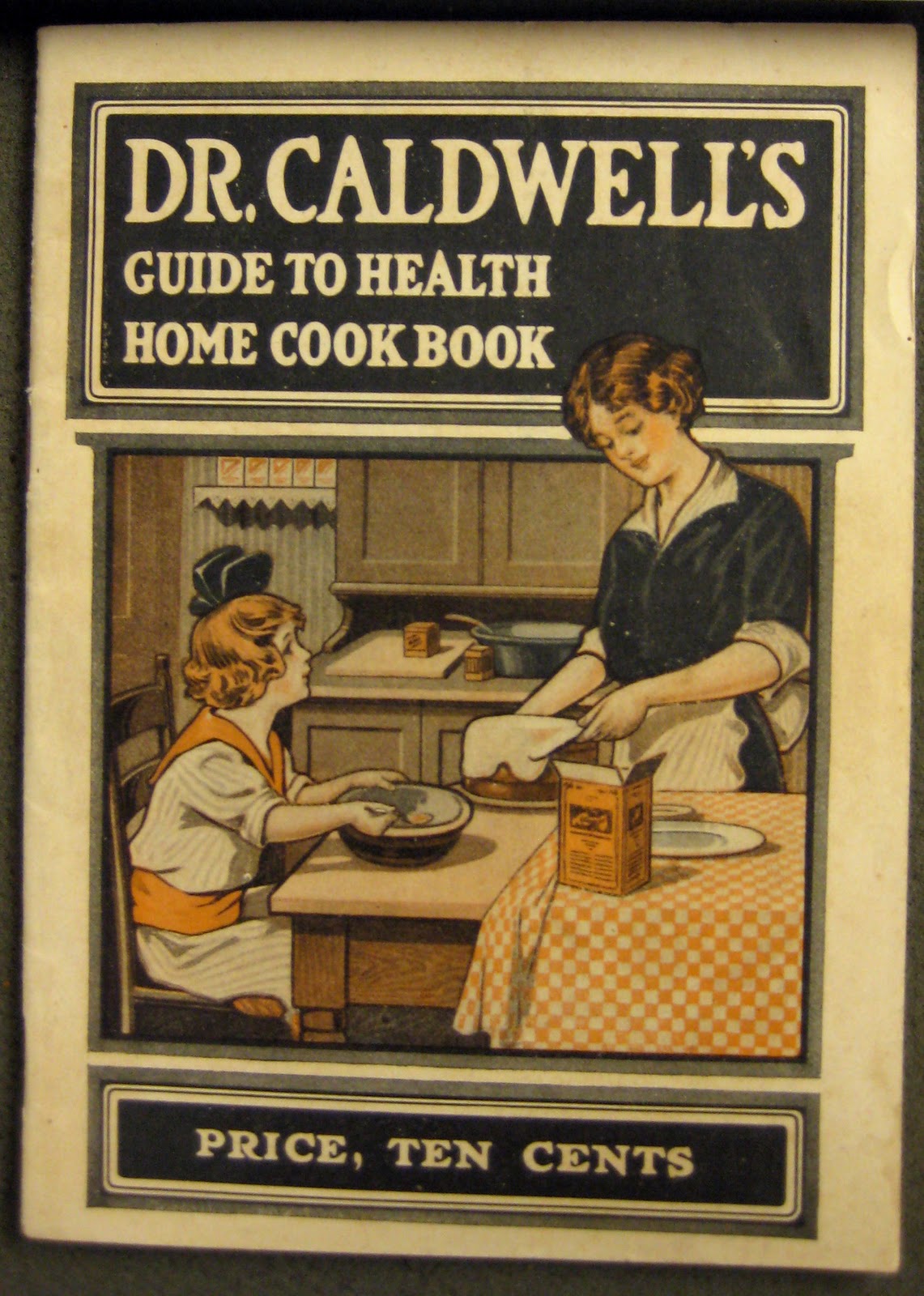
Earlier this fall I spent time at the Jan Bluestein Longone Culinary Archive during which time I began to fully recognize the historic value of collecting cookbooks, how much they can tell us about popular notions on food and health and diet at a given time.  Just a quick glance at the covers of some cookbooks from the archive, which date from 1868-1950, gives a sense of the social and economic context in which they were published. 

1868
Reprinted with permission of the William L. Clements Library, University of Michigan
1909
Reprinted with permission of the William L. Clements Library, University of Michigan


1910
Reprinted with permission of the William L. Clements Library, University of Michigan

Reprinted with permission of the William L. Clements Library, University of Michigan

1950
Reprinted with permission of the William L. Clements Library, University of Michigan
I happened to read the NYTimes piece about iPads replacing cookbooks everywhere from home kitchens to culinary schools just as I finished reading Ruth Reichl's memoir Tender at the Bone, the first  book I've read for pleasure in recent memory. And a pleasure it was! The former editor-in-chief of Gourmet magazine can string together sentences with the same seeming ease with which she whips up gourmet meals and punctuates each vignette with a related recipe. I came across a comment from a woman who took the time to cook each recipe after she reading the corresponding chapter and found it added another layer of sensory stimulation to the experience. So is it a memoir? A cookbook? Reichl's food writing certainly blurs the lines between the two, and a good cookbook does the same. It not only offers recipes but insights into the writer's approach to the kitchen, views on food and taste and life. Many food blogs now follow suit - 101 Cookbooks is certainly one that comes to mind as does local Seattle favorite, Orangette.  Notably, these blogs were then published and went on to be award-winning books and bestsellers, underscoring the print book as the superior form, the measure of success. And despite the increase in iPad app users, the rise of food writing, interest in cooking and kitchen culture is not slowing. Or perhaps someone failed to mention the proposed moratorium on cookbooks to Seattle small business owner Lara Hamilton who left Microsoft to open Book Larder, a community cookbook store and culinary-events space which opened just last month. 

For those who are comfortable bringing iPads into the kitchen, subjecting them to the whims of flying flour, sticky fingers and dripping sauces, there is certainly great appeal to the consolidated convenience of culinary apps. But for those interested in more than just the recipes, the list of ingredients, measurements and cooking directions, looking for greater literary pleasure and kitchen wisdom, I have yet to find an app that offers the same satisfaction as a well-written, well-used, well-stained cookbook. 


Tuesday, November 8, 2011

Mommies and Me

I'm spending this last rotation before Thanksgiving at WIC, a federally mandated supplemental food program for women, infants and children who meet certain income guidelines determined by the number of household members living at 185% of the federal poverty guidelines. Housed in the county's public health department, there are certain perks to the job. Election day is one. Veteran's Day is another. Which is not to say that the best things about my job are the two days off this week, but after five months I'm feeling ready for vacation. I'd assume that many of the new moms I'm working with would say the same.

Working at WIC has forced me to face the obvious: I'm a women of childbearing age - perhaps closer at this point to the end of my childbearing years than to the beginning - and I know nothing about motherhood. Sure, I studied the nutritional needs of expecting and lactating moms and have memorized the stages of feeding for children but some parts of it are foreign simply because I have not experienced it myself. I keep having to check when it is that most kids start to roll over or crawl or speak or walk so I can reassure women that their children are early geniuses, very advanced, right on schedule or taking their time progressing from one stage of development to the next. As part of WIC's big push for exclusive breastfeeding (BF) I congratulate nursing moms. I also encourage moms to make sure their kids get more activity and less television time, though I understand little of the demands on their time and energy that inevitably lead them to fail in this regard. I see the looks of fear, concern and guilt on their faces when they learn that their child has jumped percentiles and is showing early signs of childhood obesity when they promise that their child eats well, no juice, no junk food, no television, has a healthy appetite and healthy level of activity. I sympathize with them, comfort them and mostly (at least during my first week) I just smile at them, wondering if they'll see right through my overeducated childless facade.  

Holding a friend's baby in Kerry Park
There's an unspoken divide between women who have children and women who do not. Greater, it seems to me, than the gulf between women who are single and those in relationships. I expect this is because having a child entails a combined physical, emotional and spiritual transformation that only those who have gone through it can understand. And while I expect that one day I will cross the threshold and enter this exclusive club, right now I can only guess what it really means. I face this reality every day working at WIC. 

Many of my friends are now parents and they too ask me questions about feeding their kids. While I've certainly read a lot about it I can only rely on my hypothetical bag of tricks, the ways I might sneak more vegetables into their meals, offer fruit as snacks, minimize their exposure to television commercials and give them flavored seltzer instead of soda. I might focus on fostering family meal time, teaching cooking skills and building a healthy relationship with food by listening to hunger cues rather than external stimuli. I might do all of that or I might be really really tired, stressed out and hanging on by my last nerve, in dire need of a vacation. I hope to one day find out. Right now, mom or not, I'm just grateful for the day off.