Sunday, February 10, 2013

Spoiled Milk

Since the start of the school year I've been working part-time as a nutrition educator funded by the SNAP-Ed program. SNAP-Ed is the educational arm of the food stamp program, providing nutrition education to those who receive SNAP benefits. In addition to providing programming and resources in food banks and other adult ed venues it extends to schools as well, with school eligibility determined by the percentage of students who qualify for free and reduced lunches (a direct reflection of household the income levels, whether or they are actually SNAP recipients). This was not my first foray into federal nutrition programs, after all, I worked with the National School Lunch Program and WIC during my dietetic internship, but last month was the first time I felt the direct impact of Washington decision-making on my daily life.

Remember the fiscal cliff? The term which permeated the media around the new year has since been supplanted by the dreaded sequester.  Somehow amidst the frenzy I missed reports on the last minute measures that were taken by Congress to avoid the cliff, which it turned out would affect my work. The greater fiscal cliff actually contained several mini cliffs, including "the dairy cliff," described in this news byte:


Visit NBCNews.com for breaking news, world news, and news about the economy
Source: http://tv.msnbc.com/2012/12/28/look-out-here-comes-the-dairy-cliff-and-the-retail-cliff/

In addition to all budgetary concerns, our nation was on the brink of a 100% + milk price hike. As 2012 drew to an end and the 2008 Farm Bill was about to expire without the passage of a new one, Senate and House agriculture chairs and committees worked to successfully pass a nine month extension. The resulting bill provided little reform but did address the milk price debacle. Civil Eats reported:
The so-called “dairy cliff” that could have seen milk prices rise to $7 per gallon because of an automatic reversion to a 1949 government price protection system was averted, but not in a way that support the actual dairy producers.  Instead of using the language from the Dairy Security Act that was brought up earlier this year, the bill merely extended the current Milk Income Loss Contract (MILC) program that stabilizes prices while benefiting milk processors.  

How was the MILC extension funded? By unexpectedly slashing the 2013 SNAP-Ed budget by $110 million.  I learned this when I returned to work following winter break and found that the unexpected cuts to this year's budget reduce the number of hours I can teach and the amount of time I can put into collaborating with school staff around nutrition education. While this presents an immediate challenge to my state of employment, the real losers here are the SNAP eligible who are now denied nutrition education. The Public Health Institute issued this statement in response to the cuts:

“SNAP-Ed helps low-income Americans make healthy choices on a limited budget, reduces their risk of chronic disease and obesity, and optimizes the economic and nutritional value of SNAP benefits. SNAP-Ed programming has proven that investment in nutrition education can enable SNAP to effectively address the dual challenges of improving nutrition and food security among low-income populations. This funding cut to the program undermines and weakens a critical component of our nationwide efforts to promote healthy eating and prevent chronic disease just as investments to prevent obesity and promote healthy eating are beginning to show results.

So milk prices will remain artificially low for consumers and oddly, dairy farmers barely benefit from this deal. The government is heavily invested in dairy prices and the MILC program provides a safety net for farmers when milk prices dip too low or cost of feed rises too high (as it has this year due to the drought). But at what cost?

When considering this situation it's hard not to ponder the role of dairy in our national consciousness.  Dairy has long warranted its own food group, justified its high calcium content rather anything inherently "dairy" about it despite the fact that milk remains one of the eight most common allergens and causes digestive complications in the 40 million Americans who are lactose intolerant.  True, it is fortified with vitamins A & D and is a staple in the American diet but it has fought to remain that way through effective marketing strategies. The dairy industry benefits from many federal nutrition programs, including the NSLP and WIC programs. The dairy council, at least in Washington State, is closely tied with SNAP-Ed and positions itself to partner with schools by creating nutrition education materials and offers a free $20 allotment to anyone teaching nutrition. It even uses the domain name eatsmart.org which is conveniently similar to eatright.org - the official website of the Academy of Nutrition and Dietetics. How is it that the dairy council has positioned itself as a nutrition authority, telling the public how to eat?

While it's true that I don't consume dairy products, I am not entirely opposed to it. But I do think dairy's role in the American diet is highly problematic for the reasons mentioned and for many more. When dairy farmers are struggling and the high price of milk costs our nation its nutrition education and disease prevention programs, it's time to rethink our model. Hopefully the 2013 Farm Bill will allow for some much-needed reform. We have until seven and a half more months to figure it out.

Sunday, October 14, 2012

Philly + Farming + Fracking +Food = FNCE

Last week I flew to Philly for the Academy of Nutrition and Dietetics' annual Food & Nutrition conference & Expo (FNCE).  After following the conference on Twitter last year I was excited to see if all the buzz was genuine or critical hype. I had to see it for myself.

The opportunity to attend FNCE presented itself when I took on the role of co-editor of the member newsletter of the Hunger and Environmental Nutrition Dietetic Practice Group (HEN DPG). I'd joined HEN after hearing many of the dietitians I admire rave about it, and with a focus on sustainable and accessible food and water systems, it is one of a few groups of dietitians who practice with the larger intention of creating a more just and equitable food system based on the belief that healthy soil produces healthy food which nourishes healthy people (a syllogism I borrowed from J.I. Rodale).

As a newly registered dietitian, I felt like a bit of a phony joining a leadership team and attending a conference with thousands of professionals who have far more experience. But from the moment I boarded the plane in Seattle I knew I was in for a treat. As I waited at the gate I looked around at the other passengers. It was clear that many others were dietitians too. So I wasn't surprised when the woman seated next to me on the place opened a folder with the conference logo on it. I mentioned that I too was headed to FNCE and we began to chat. She and her husband were heading there together, as they did nearly every year. We became quick friends and decided to make our way together from the airport to the city center. I was mortified when, aboard the train I realized I had no cash on me. But when the conductor came around my new friends paid my $7 fare. I was touched by their generosity. "Pay it forward," they told me. Still, I mailed them back their money earlier today.

And so it continued. On my first night in town I met the HEN leadership team I'd been corresponding with via email and conference calls and I was invited into their inner circle. It was an amazing experience to meet and speak with dietitians whose work I'd admired for years. Voices were familiar from podcasts and interviews and lectures I'd heard in the past. While I was clearly the new girl on the block I was welcomed as though I belonged and I marveled at the generosity of my colleagues. Later, as I tried to explain the feeling to my mother I remembered an incident that I hadn't thought about in over twenty-five years. When I was in kindergarten I boarded the school bus at the very last stop and could not find an available seat. I walked further and further along and could feel the lump forming in my throat as I searched for a place to sit. When I reached the back of the bus a group of eighth graders saw me and snatched me up. They must have seen my distress or thought I cute and they squeezed me in on the seat between them. For the rest of the school year I never had to worry about finding a seat. I knew the older kids had my back. FNCE was like that for me, only the support of the HEN members extends well beyond the conference.

In the various sessions I attended I heard dietitians speak about the inspirational work they are doing in their communities. I spent hours in the evenings debriefing with intelligent, civic-minded RDs about the field, the Academy and the future of our profession. I visited the Rodale Institute and an organic dairy farm. I attended a film "feastival" where I learned about the horrors of fracking (truly frightening! educate yourself!) and a non-GMO event in support of CA proposition 37.  At a breakfast one morning honoring leaders in integrative and functional nutrition I had the chance to thank the dietitian who had inspired me to study nutrition five years ago. Life had come full circle.

And finally, the expo did not disappoint. (Well, actually it did!)  I tried samples of more gluten-free items than I ever could have imagined and took pictures of the infamous booths of industry adversaries whose sponsorship undermines the work of dietitians everywhere. Had I not gone to into the expo I might now have believed all the critics who said that industry had infiltrated the profession. But then there was the program, with its alarming number of industry sponsored presentations and research. While I chose to spend most of my time in the sessions that appealed to me, I enjoyed following the live-tweeting of dietitians who were vocal in their criticism of these obscenities. (Three sessions sponsored by the Corn Refiners Association? Really?)

I left FNCE knowing that there's a growing movement within dietetics that is trying to shift the internal and external focus of our field, to empower communities to take charge of their health and the health of the planet. I was inspired by their work and honored to be considered a colleague. Looking forward to Houston next year! A line I never thought I would utter...


Wednesday, September 19, 2012

Return of the Minimalist

Earlier this evening I attended the kickoff event of Seattle Arts & Lectures at Benaroya Hall in downtown Seattle.  Last time I was there I was onstage as Bastyr University's grad student commencement speaker, but this time I was in the rear row of the balcony to hear Mark Bittman's talk on "The Future of Food" followed by a Q&A.  In recent years Mr. Bittman has evolved from "The Minimalist" New York Times food and cooking writer into a voice for the food movement. His opinion column has raised important questions about the role of dairy in our diet, supported GMO labeling, and chronicled food pioneers from Maine to California, so I was interested in what he had to say.

Mr. Bittman is an important player in the current conversation around food, if for no other reason than he has a powerful platform upon which he can publish his views. Still, in person he is the least charming of the "food politics trifecta," with Michael Pollan and Marion Nestle far exceeding him in eloquence, likability and in my point of view, expertise. Yet there is something about his brashness, his everyman-ness, his minimalism that makes him more of a voice for the masses than either Pollan or Nestle. He paints a picture of Big Food as the Big Bad Wolf and hails Big Government as the solution. He is optimistic about the potential for an alternative U.S. food landscape - one that relies on small and medium sized farms which employ primarily organic methods to support what will be an increasingly plant-based national diet  - but is comfortable asserting that it will either come about by way of democratic change or post-apocalyptic necessity. He freely admits that little will come of the next farm bill but encourages the audience to think carefully about who they elect to the House and Senate where many of our food battles take place.

It was a safe choice for the inaugural SAL event. Talking about the food movement to forward-thinking, composting, gardening, PCC-shopping, CSA members in Seattle is just about the least risky event imaginable. Though I was surprised at how openly political he was (publicly assuming that the entire audience would be voting for Obama - not unlikely, but still...) I was also surprised by how little he was willing to share. During the Q&A he was asked about his favorite vegetable and what he likes to cook and he seemed openly irritated by these lines of questioning. When the moderator Chip Giller of Grist asked about his transformation from writing recipes to writing about the food system, he insisted that was his interest all along but it was not until recently that he had enough of a following to actually get the Times to give him the space. Though his cooking columns were his bread and butter, and his cookbooks have sold thousands of copies, he was far less interested in talking about those, much to the chagrin of some of the fans present this evening.  At the end of the night I felt like he'd touched upon many issues - from junk food marketing to kids, the obesity "pandemic", farm subsidies for corn, wheat and soy to veganism, food workers right and immigration policies - mostly in a superficial manner, refusing or perhaps unable to bother going deeper into these penetrating questions and uncertainties regarding the future of food in this country and worldwide. To Mr. Bittman's credit he was staying true to his minimalist roots, keeping it simple and straightforward. His take away message was that in addition to doing our part and making food choices that we believe in, we need tighter federal regulations, more public health initiatives and more Democrats in Congress (and of course The White House) to achieve that.

Tuesday, September 11, 2012

Food & Money

Recently I was teaching a nutrition class to food bank clients and after introducing MyPlate asked them how they meal plan to ensure balanced meals. One client explained that he simply did not have the money to plan out meals in the traditional manner but based his meals around items from the food bank. We then spent some time sharing ideas and clever ways to build easy, affordable and healthy meals around a few staple foods. The exercise was a useful reminder that while some of us can decide exactly what type of meals we want to eat (ie. what am I in the mood for?), others must work with what is available.

The class was still fresh in my mind when I sat down to watch Food Stamped, a documentary about a couple that takes "the food stamp challenge" for a week, spending around $1 per meal while trying to eat healthy, well-balanced meals (read a nice review with great food budgeting tips here). The film features Shira Potash, a nutritionist who teaches cooking classes in low-income neighborhoods, and her filmmaker husband Yoav, who appear to be West Coast liberal Jews (not unlike me) with a preference for locally sourced organic foods. They do their shopping at Berkeley Bowl where they quickly learn some tricks to procuring free food. They hoard free samples, buy in bulk, painstakingly compare prices, forego many of their favorite foods, foray into dumpster diving and generally spend an inordinate amount of time thinking about food. For Yoav, in particular, food is always on the brain. He is never fully satisfied after a meal, and at the end of the project when the couple consults with a dietitian about their week's intake we are told that he has not eaten enough calories. Despite all their efforts and nutrition knowledge, they learn that for food stamps to provide the supplemental nutrition they are intended to requires a great deal of thoughtful planning and savvy shopping. Most people lack either the time or the know-how for such an endeavor.

As if that's not enough of a barrier, today the New York Times published a piece about Michael Bailey, a county health worker trying to improve diet and lifestyle habits among low-income residents of Oklahoma City.

Mr. Bailey argues that poverty is a big barrier to prevention. Hand-to-mouth living and the short-term thinking that often goes with it means many people are shopping at gas station minimarts where junk food is the staple. Exhausted mothers may let their children fend for themselves in such stores with food stamp swipe cards.“If you ask, ‘What would help your health the most?,’ people say, ‘More money,’ ” Mr. Bailey said.

And yet, a recent study shows that low-income families cook most of their meals at home and do not obtain them from fast food joints, as is commonly believed. When Share Our Strength released the findings they emphasized that most families are looking for ways to prepare easy, healthy meals for their families. (In another study last year fast food purchases were found to be more common among middle-income Americans.) Their Cooking Matters program aims to do just that, equipping teens, adults and families with the skills and resources to cook on a budget. (Full disclosure: I volunteer with Cooking Matters.)

Source: Share Our Strength

Emergency food programs like food banks, and supplemental programs like SNAP (food stamps) and WIC provide a tremendous net for many Americans.  While they help reduce hunger and the anxiety of food insecurity, it is only with additional education and training that they can be effective as nutrition and health promotion programs. To revise the old adage: Give a man a meal and he eats for a day. Teach him how to cook healthy meals on a budget and he can reduce his risk of chronic disease and dependence on the healthcare system for a lifetime. Or something like that.

Wednesday, September 5, 2012

The Feel Good Bar

Last week I found myself in the energy bar aisle at the supermarket, faced with the increasingly challenging feat of choosing a good snack. With so many gluten-free, dairy-free options on the market, it's tough to decide which bar is best, considering that so many of them are not only promoting natural, unprocessed ingredients but also the social causes they support. This type of do-good marketing is a popular trend lately as corporate social responsibility is now a way to capture the conscience of consumers who can justify the cost of their purchases by feeling like it includes a contribution to a good cause.

Case in point: TOMS. They sell shoes. Their shoes aren't that great - they provide little to no support and they're not much to look at and yet over the years I've already bought several pairs, spending more money than I believe they are worth. Why? Because TOMS is not a company but a movement, one that donates a pair of shoes for every pair purchased, to a child in need in developing countries. Connecting consumers' spending choices to a larger social good has been a successful aspect of their marketing campaign and has caught on elsewhere too.
Back in the supermarket it was a chocolate banana flavored Two Degrees bar that caught my eye. Featured prominently on the label is the tagline "Is Good: Does Good," offering that "For every bar you buy, we give a meal to a hungry child." Immediately I felt justified in paying close to $2 for this bar over the others, suddenly thinking I would not only be feeding myself but someone else with this purchase. It's the same rationale I remember using when paying over $40 for my first pair of TOMS: my spending was elevated from a selfish act to a magnanimous one. I felt good about buying the bar and it tasted pretty darn good too. I only hoped that the RUTF (Ready to use Therapeutic Food) that was being provided to the beneficiary of my purchase was equally as satisfying.

An impressive infomercial about how Two Degrees bars address malnutrition

Both TOMS and Two Degrees are examples of a growing One-for-One movement where one person can directly impact another's life, in most cases someone in need who lives halfway around the world. But as I think of these business models, they would more aptly be called One-for-Two. Just as with Two Degrees bars, you buy one and feed two so that the double rewards of the purchase (ie. I benefit and so does someone else) empower us to feel good about our spending on multiple levels.  And while I don't believe the long term solution to hunger is in RUTF packets, they do address acute malnutrition and offer opportunities for us to engage in larger global health issues as we go about our daily lives.  Further down the line, it would be exciting to see smartphone apps that can scan items, see their social responsibility track record (in case it's not as clearly evident on the packaging) and encourage more of One-for-One (or as I argue, One-for-Two) model. 


Wednesday, August 22, 2012

Hunger Pangs

With this past weekend's release of The Hunger Games DVD, it seemed not entirely inappropriate to discuss the movie on a blog centered of all things food.  Over the past few months I have peppered my summer reading with The Hunger Games trilogy, mistakenly believing it was light fare. These highly engrossing page turners are anything but light. They provide a sort of post-apocalyptic look at a fragmented society divided into distinct districts that are enslaved to a gluttonous and frivolous group of wealthy rulers in the Capitol who amuse themselves with a televised fight-to-the-death competition of peasant children of Panem each year. It's Shirley Jackson meets Cormac McCarthy meets the Olympics. Though written for an adolescent audience the books have become bestsellers amongst kids and adults alike and as all bestsellers do, they spawned a movie franchise as well. At the forefront is protagonist Katniss Everdeen, a teenage girl who cleverly survives the Games and sparks a rebellion while sharing her every thought and conflicted feeling about her deceased father, her innocent younger sister, her broken healer mother and her two love interests with readers.

I made a point to read the entire series before seeing the movie, lest my mental images be corrupted by someone else's casting and style decisions. I was glad I did, not only for this reason, but because the film is less tightly framed around Katniss's character development and emotional experience. And also, because it proves once again that Hollywood can take a subversive novel and turn it into eye candy.

It’s hard to resist looking at the parallels between the alternate world of Panem and the reality we inhabit today. The all-pervasive media, the competitive reality-television, the fabrication of images through highly stylized fashion, interviews and back-story and the obsession with power, money and material goods is something that one needn't look to fantasy literature or the movies to find. The concept of hunger, an issue worldwide and in this country as well (where 1 in 6 Americans is food insecure) is explored far more thoroughly in the books than onscreen, and while The Hunger Games  movie is promoting the anti-hunger work of partnering agencies Feeding American and the World Food Programme, it doesn't make clear what the causes of hunger are (the organizations' sites and bonus materials do). The social inequities that keep the rich well-fed and the poor starving with government mandates of monoculture-type local economies was evenly conveyed in the books and could have provided a more interesting and compelling visual narrative. Instead, the movie succumbed to the very same tendency the book rails against by favoring style over substance, image over content. 


The Hunger Games provides a great opportunity to engage audiences in a dialogue about media literacy. What is the veracity of images conveyed to us? Whose hidden agenda controls those images? What agency do we have as viewers to change the types of images we are fed and expose the power players who work to promote the status quo?  It's a worthwhile exercise to ask young adults (or anyone, really) who read the book about their impressions of the film. What were some of the differences? What was left out of the film and why? Why were these choices made by the screenwriter/director/producer/studio and what can we learn about the role of media in shaping our social consciousness? Critical takes on popular works are some of the most potent and exciting way to  take a mediocre work and elevate it to an important classic while promoting our engagement as active viewers. Watching The Hunger Games left me hungry for this type of discussion. It may not have started yet, but there's always the sequel...

Tuesday, August 14, 2012

Mastering the Art of Cooking

When I moved to Seattle I was determined to learn how to cook. Sure I already knew how to bake salmon, boil pasta and roast vegetables, but I wasn't comfortable in the kitchen, didn't speak the language of cookbooks (braise? blanch? julienne? chiffonade?), didn't own the right appliances (food processor? immersion blender?) and was terrified of dried beans. I remember confessing this to the man was not yet dating but would later marry. I had just burned another pot and ruined an entire batch of soup. "I can't cook," I explained in frustration. "Anyone can cook," he said matter of factly.Julia Child would have agreed.

Today marks 100 years since her birth. She is remembered by chefs, celebrities and lay folks alike for bringing cooking - specifically French cooking - to the masses in a straightforward manner that was also joyous and celebratory.  It's true that my only memories of her from childhood are brief blips on the television (accompanied by an oddly high-pitched voice) as I quickly flipped channels to a some more flashy and exciting programming, and it was only later on in life that I met the woman through her work and her legacy. Years ago when I read Julie Powell's Julie and Julia, the famed blog-turned book-turned movie, I grew interested in Julia Child, having discovered small bits of information about her. She was over six feet tall, she was in her thirties when she got married and she signed up for classes at the Le Cordon Bleu to learn to cook because she was bored living in Paris. It was enough to drive me to read My Life in France and learn more about her personal life. She adored her husband. She valued taste over nutrition. She built a successful writing and television career later in life.

photo source

I have never read Mastering the Art of French Cooking and probably never will. But I'm inspired by Julia Child because she didn't take herself too seriously and believed that anyone could cook. She pioneered cooking programs, paving the way for the Food Network and celebrity chefs, for better or worse. And she taught people like me how to have fun in the kitchen.

Monday, August 13, 2012

High Maintenance Guests

Four and a half years ago I eliminated gluten from my diet. Going gluten-free was a bit of a challenge at first, but in time with reframed dietary parameters I easily adapted to my new diet. The aspect that continues to be challenging is how to tell hosts about my eating practices, so I came up with some practical pieces of advice for hosting "high maintenance" guests. Read all about it in my post on The Jew and the Carrot.

Thursday, August 2, 2012

How Bout Them Apples?

An Apple A Day: The Myths, Misconceptions, and Truths About the Foods We Eat
by Joe Schwarcz
354 pp. Other Press. 2009
The key to perfect health?
Click here for photo source.

The title was appealing enough (no pun intended). Last year a nutrition friend of mine was reading this book and I was curious about it. Myths? Misconceptions? Truths? Count me in. About midway through the book I wanted to count myself out. But I stuck with it, despite reading the author's introductory disclaimer on page three: "Chances are that most of you will be as picky with this book as you are with your food." Indeed.

An Apple A Day is divided into four sections, each looking at hot science topics in food. "Part One: Naturally Occurring Substances in Our Food Supply" primarily examines the claims around phytonutrients, such as antioxidants and other bioactive compounds that have been isolated in research and touted for their health benefits. It's like taking a tour of Super Supplements and asking whether any of the supplements are worth the investment. Presented in the proper format, this section has the potential to be very insightful. Perhaps because I spent several months studying bioactive compounds during grad school or the fact that the book is now three years old and already feels dated, but I found this section to be lackluster. After nearly every chapter he comes to the same conclusion: phytonutrients have potential to be miracle substances but lack conclusive evidence to back up their claims. Many of these compounds (resveratrol! lycopene! sulforaphane! lutein!) likely rely on a specific synergy that can only be achieved through the entire food matrix. Incorporate whole foods into your diet and cover all your bases. I agree with his bottom line and just saved you from reading the first 150 or so pages of the book.

In "Part Two: Manipulating Our Food Supply," Schwarcz looks at additives like MSG, natural and artificial sweeteners, nitrates, food coloring and GMOs. In each he mentions (but doesn't cite) research debunking the "alarmist" claims made against these substances. He goes even further in "Part Three: Contaminants in Our food Supply" where he finds no convincing health concerns regarding pesticide use, hormones, and endocrine disruptors in the research. His conclusions are weak concessions. On the issue of BPA he wonders why we're considering banning a substance that is only theoretically harmful when both cigarettes and alcohol lead are known to kill millions of people theoretically. He hesitates to tell people to only buy organic produce or wild fish because they are expensive and eating conventional apples or farmed salmon certainly outweighs the potential harm of pesticides or PCBs. There is a certain truth to these arguments but the problem is that they justify the status quo rather than rely upon emerging science to stir a change to the food system system so that we wouldn't have to choose the lesser of two evils to incorporate into our diets.

Lest you wonder, Joe Schwarcz has a PhD and has some serious academic cred as the director of McGill University's Office of Science and Society. Which is why I was confounded when the 330+ page book contained no footnotes. Where are the citations for all the studies he refers to? In Kessler's book there were over 100 pages of references alone (just one of the reasons that it was a faster read). Schwarcz's tones is uneven and changes over the course of the book, from light and curious in the Part One to more neutral and probing in Part Two, growing more conservative in Part Three to downright cynical and dismissive in "Part Four: Tough to Swallow," a section that discusses kosher diets, detox diets, goji juice and green tea and seemed more like a miscellaneous addendum to the book.

By the end of the book I was looking for something redemptive about the whole experience. I found it in the three page conclusion, which could be further whittled down to this clumsy sentence:
"When you carefully scrutinize the scientific studies that are being rolled out on a daily basis, most amount to no more than tinkering with the basic nutritional princiles we have tried to lay down: eat mostly foods based on vegetables, fruits, whole grains, and low-fat dairy products, and don't overeat."

Sound familiar? It's yet another iteration of Michael Pollan's Eat Food. Mostly Plants. Not too Much. If healthy eating is so simple, why is it so hard for people? Now that's a book I'd like to read.

Thursday, July 26, 2012

Salty, Sweet and Out of Control

The End of Overeating: Taking Control of the Insatiable American Appetite.
by David Kessler
320 pp. Rodale, Inc. 2009


The root of American overeating is summarized in Dr. David Kessler's book, The End of Overeating, in three words: sugar, fat and salt.  Each of these alone will trigger certain amounts of pleasure in our brains, but together, the trio is irresistible.  Kessler launches into many scientific reasons why this is the case and uses anecdotes to show that many smart, rational people he knows cannot resist eating excessive amounts of tempting yet high calorie junk foods, despite knowing better. Few of us need that illustrated by example.


Perhaps more interesting then, is his exposé of the ways in which the food industry manipulates consumers utilizing the latest science on taste and pleasure. As the former commissioner of the FDA he has inside information and quotes industry professionals attesting to the lengths to which they will go to create an addictive product. Combined with their marketing efforts ("Betcha can't eat just one"), the book certainly paints a picture of a food environment where the public is damned to overeating, or as Kessler fancily calls it, "conditioned hypereating." 


Thankfully, he offers up a treatment program, called Food Rehab. Just as in other substance-related rehab programs, it is meant to help people become aware of their conditioned hypereating, rewire their brains, create new habits to restore control over eating and think differently about food. The main distinction in his work from others before it lies in his conviction, backed up by research, attributing the undesirable eating behavior (ie. the conditioned hypereating) to actual biological mechanisms rather than willpower. It's a nuanced approach that takes the blame away from the individual. Overeating isn't a flaw, it's a physiological urge that must be overcome through treatment and training. 

I certainly identify with the type of hypereating Kessler describes. Since I was ten years old I could tell you that I was absolutely powerless in the face of sugar cereals - I could literally eat boxes of them and never feel full. While I know that I'm not alone (my sister has the same weakness), I was intrigued to learn that this constant craving and insatiable desire is by design. Cereals get special attention in the book as they do in the recent Corby Kummer article in Smithsonian Magazine's Food Issue where he too admits to being "helpless before a box of dry cereal." 

As in most research related to caloric intake and weight gain, the science of conditioned hypereating points to yet another instance of our bodies working against us. The brain wants more pleasure. Sweet, salty and fatty foods provide it. One of the reasons many diets and weight loss plans fail in the long run is because they are restrictive and lead to feelings of deprivation. There is tremendous potential for lapses under Kessler's plan, which he freely admits. And I agree with his call for awareness about hunger cues and creating a new relationship with food. And yet I can't help but wonder what would happen if rather than constantly fighting our bodies we find a peaceful middle ground? Can we ever learn to "eat just one"?

Saturday, July 21, 2012

Summer Reading

After a long break, I'm happy to be back blogging about my summer reading.  When I was a kid, summer reading was certainly not something I would have elected to do.  Assigned reading was more of a chore then, to be squeezed in sometime during camp while I would rather be playing sports or gossiping with friends. Now, having completed my credentials after four years of schooling, I'm excited to have the time and freedom to stock up at the library on the recent books that I missed the first time around.

I should say that I love reading fiction far more than non-fiction, so I plan to pepper my reading with novels (Hunger Games!) and short stories as well. Mostly, though, I will blog about the food and nutrition-related books. And anything else that pops into my head.

Here's my list so far:

The End of Overeating by David Kessler

An Apple A Day by Joe Schwarcz

Cerealizing America by Scott Bruce and Bill Crawford

Tomatoland by Barry Estabrook

American Wasteland by Jonathan Bloom

Why Calories Count by Marion Nestle

It's an ambitious list, and my success will rely upon the help of fellow Seattlelites who have placed numerous holds on these books at the library. They will determine whether/when I can actually get my hands on these.

It is an exciting time to explore the current food landscape. So much has changed in the past few years and while I've tried to keep abreast of the latest work in the field, I can't wait to dive right into the books themselves.

What books do you recommend?

Wednesday, March 14, 2012

RD Day

Sometimes it seems as though every day of the year is a special day. And certainly it is - each day is a gift and should be celebrated. Today is no exception and shares the distinction of both Pi Day (3.14!) and Registered Dietitian (RD) Day. The Academy of Nutrition and Dietetics (AND, formerly known as the ADA) created this day during National Nutrition Month:
to increase the awareness of registered dietitians as the indispensable providers of food and nutrition services and to recognize RDs for their commitment to helping people enjoy healthy lives. 

It's true that RD's must complete rigorous academic and professional requirements to attain their registration.  In addition, RD's must continue education to maintain registration status with no less than 75 credits every five years. And yet, having completed my master's degree in an accredited nutrition program and a dietetic internship - two-thirds of the way to being an RD myself - I have mixed feelings about the significance of the day. Probably because there are still many hurdles the RD profession has to overcome to achieve the respect and recognition it deserves. And probably because I'm still not an RD. What stands between me and this credential? A three-hour exam. So on RD Day 2012 I salute the incredible, talented, driven RD's who have guided me, preceptored me and inspired me over the years. I hope to soon join your ranks.

Tuesday, March 13, 2012

Edible Inspiration

Imagine you are walking through a forest. Behind you are nut groves. To your left a pond with ducks. Ahead are orchards with unusual fruit trees like persimmons and Asian pears. Beneath the trees were once berry bushes that have since been removed as the canopy above it has grown. All around are herbs and native plants designed to promote the growth of these trees. Imagine this forest also includes playing fields, education programs, community p-patches and harvesting parties. Last weekend I visited the much-heralded Beacon Food Forest in South Seattle and took this imaginary tour. Beyond an inspiring project the food forest was a lesson in community organizing, dedication and creative vision.

I'd heard about the food forest as most people did, through Facebook.  It was an article on a local Seattle non-profit news site Crosscut.com about "the nation's largest public food forest" that went viral and first drew public attention to the project. As word spread other major media outlets reported on the edible food forest and the three year project was suddenly in the national spotlight. So I was excited to learn about the opportunity to take a tour of the site, fittingly hosted by Crosscut.

And so on a cold and rainy March day I joined close to fifty others at Jefferson Park in Beacon Hill to hear about the genesis of the food forest. I had read the articles and wanted to see what all the fuss was about.


This is the site of the future forest. Not much to see right now. But as we walked along the gravel road we were asked to imagine. Imagine the trees, the insects, the bushes and groves. Imagine the potential.


Interestingly the forest began as a final project in a permaculture design class. As the idea gained momentum the original designers formed the Friends of the Beacon Food Forest which includes community members and activists involved the project. The group received a $100,000 award from the Seattle Department of Neighborhoods and P-Patch Community Gardens Program, and beyond working on the project they gathers for social events including potlucks and movie screenings to foster community. 

Site plan as posted on NPR's food blog, The Salt
Work will begin this summer with planting starting in the fall. The forest will rely on many volunteers and will take years to reach fruition. But there is a lot of energy around the project and there are many exciting aspects to this edible landscape - the application of permaculture principles, the use of public land, the issue of community revitalization and of course the food justice component. And no one involved with the project seems concerned that people will take advantage of the forest and pick all its fruit. Instead, they are firm in the belief that the food forest will be a place of community, respect and of course, imagination. And by the end of the tour as this group of locals stood around eating home-baked cookies, I found myself reminded of the famous quote from Margaret Mead: "Never doubt that a small group of thoughtful, committed citizens can change the world. Indeed, it is the only thing that ever has."

Sunday, December 4, 2011

Holiday Hiatus

Thanks for stopping by! After a hectic few weeks of moving out of Ann Arbor, celebrating Thanksgiving with family in sunny Southern California and settling into my new apartment, I am in the midst of another great internship rotation.

I am so fortunate to have been able to set up a "distance" rotation so that I can work in Seattle in the weeks between Thanksgiving and Christmas. After that I'll return to Ann Arbor to finish up my internship... I hear January tends to be cold in Michigan.

Until then I'm working with Rainier Valley Eats!, a project of Community Kitchens NW and Seattle Tilth. I was able to secure a position with a very generous local RD who specializes in community nutrition. When I'm not busy with my rotation, I am unpacking and reorganizing, cozying up with my fiance and a hot cup of tea, cooking, catching up with friends and participating in community events. Occasionally I make some wedding plans too.

It's a challenge to keep my hand on the nutrition pulse, but since I compulsively consume any and all articles I come across I will try to continue to reflect upon this important and dynamic field. While I'm gone, check out some of my sidebar links to satisfy your appetite for critical thinking.

Happy Holidays and Happy New Year!

Wednesday, November 9, 2011

Cooking by the Book

Just one cookbook. That's all I own. Until recently I had none, but as a close family member works at the Good Housekeeping Research Institute and is privy to such things as free cookbooks my first one, a vegan dessert cookbook, arrived in the mail last year. The design is sleek, the pictures are lovely but I cannot vouch for the recipes. I have yet to try one. I'm not used to cookbooks. Growing up the only recipes I used were on the sides of boxes. My mother owned a few cookbooks which came out on special occasions and had the expected food stains and crumbs on the frequently referenced pages but I never used them, had little attachment to them and never bothered to get any of my own. By the time I was interested in recipes there were plenty available (free!) online and cookbooks were beginning to seem unnecessary. And all that was before the iPad, the take it anywhere and everywhere, use it for everything better than a Kindle iPad. This week The New York Times asked the very question I've secretly wondered for years: are cookbooks obsolete?   While this extends far beyond cookbooks - the future of print books has certainly been in question for years - there has always been a certain weight given to cookbooks, precisely because they often bear the stains and the crumbs, the remembrance of meals past, with notes and scribbles added in the margins for slight tweaks, adjustments and personal preferences. I've kept quiet my disinterest in cookbooks because I do have an appreciation for what it means to save cookbooks, to pass them on from one generation to the next and to do what other foodies freely admit to doing - reading them in bed.  

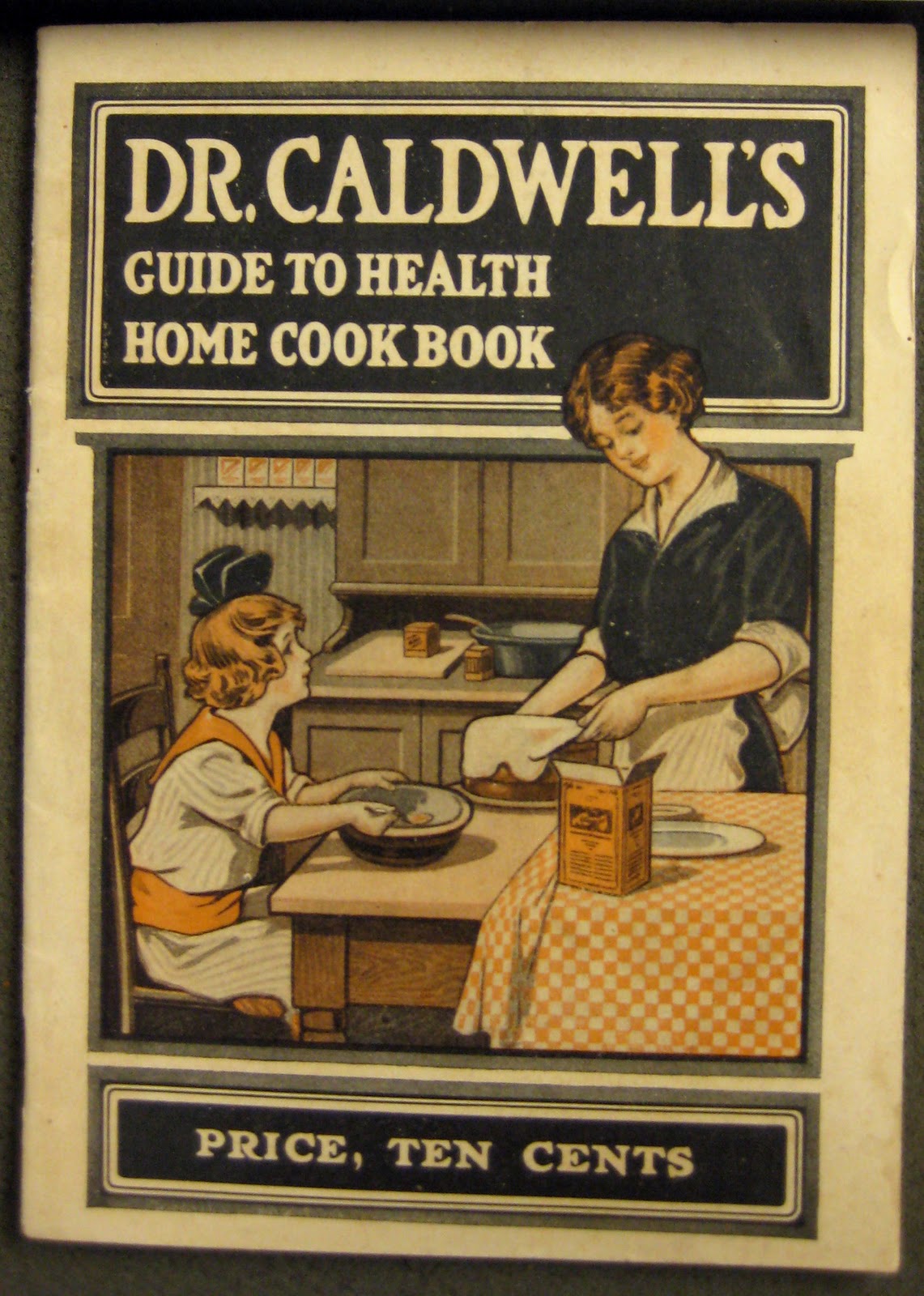
Earlier this fall I spent time at the Jan Bluestein Longone Culinary Archive during which time I began to fully recognize the historic value of collecting cookbooks, how much they can tell us about popular notions on food and health and diet at a given time.  Just a quick glance at the covers of some cookbooks from the archive, which date from 1868-1950, gives a sense of the social and economic context in which they were published. 

1868
Reprinted with permission of the William L. Clements Library, University of Michigan
1909
Reprinted with permission of the William L. Clements Library, University of Michigan


1910
Reprinted with permission of the William L. Clements Library, University of Michigan

Reprinted with permission of the William L. Clements Library, University of Michigan

1950
Reprinted with permission of the William L. Clements Library, University of Michigan
I happened to read the NYTimes piece about iPads replacing cookbooks everywhere from home kitchens to culinary schools just as I finished reading Ruth Reichl's memoir Tender at the Bone, the first  book I've read for pleasure in recent memory. And a pleasure it was! The former editor-in-chief of Gourmet magazine can string together sentences with the same seeming ease with which she whips up gourmet meals and punctuates each vignette with a related recipe. I came across a comment from a woman who took the time to cook each recipe after she reading the corresponding chapter and found it added another layer of sensory stimulation to the experience. So is it a memoir? A cookbook? Reichl's food writing certainly blurs the lines between the two, and a good cookbook does the same. It not only offers recipes but insights into the writer's approach to the kitchen, views on food and taste and life. Many food blogs now follow suit - 101 Cookbooks is certainly one that comes to mind as does local Seattle favorite, Orangette.  Notably, these blogs were then published and went on to be award-winning books and bestsellers, underscoring the print book as the superior form, the measure of success. And despite the increase in iPad app users, the rise of food writing, interest in cooking and kitchen culture is not slowing. Or perhaps someone failed to mention the proposed moratorium on cookbooks to Seattle small business owner Lara Hamilton who left Microsoft to open Book Larder, a community cookbook store and culinary-events space which opened just last month. 

For those who are comfortable bringing iPads into the kitchen, subjecting them to the whims of flying flour, sticky fingers and dripping sauces, there is certainly great appeal to the consolidated convenience of culinary apps. But for those interested in more than just the recipes, the list of ingredients, measurements and cooking directions, looking for greater literary pleasure and kitchen wisdom, I have yet to find an app that offers the same satisfaction as a well-written, well-used, well-stained cookbook. 


Tuesday, November 8, 2011

Mommies and Me

I'm spending this last rotation before Thanksgiving at WIC, a federally mandated supplemental food program for women, infants and children who meet certain income guidelines determined by the number of household members living at 185% of the federal poverty guidelines. Housed in the county's public health department, there are certain perks to the job. Election day is one. Veteran's Day is another. Which is not to say that the best things about my job are the two days off this week, but after five months I'm feeling ready for vacation. I'd assume that many of the new moms I'm working with would say the same.

Working at WIC has forced me to face the obvious: I'm a women of childbearing age - perhaps closer at this point to the end of my childbearing years than to the beginning - and I know nothing about motherhood. Sure, I studied the nutritional needs of expecting and lactating moms and have memorized the stages of feeding for children but some parts of it are foreign simply because I have not experienced it myself. I keep having to check when it is that most kids start to roll over or crawl or speak or walk so I can reassure women that their children are early geniuses, very advanced, right on schedule or taking their time progressing from one stage of development to the next. As part of WIC's big push for exclusive breastfeeding (BF) I congratulate nursing moms. I also encourage moms to make sure their kids get more activity and less television time, though I understand little of the demands on their time and energy that inevitably lead them to fail in this regard. I see the looks of fear, concern and guilt on their faces when they learn that their child has jumped percentiles and is showing early signs of childhood obesity when they promise that their child eats well, no juice, no junk food, no television, has a healthy appetite and healthy level of activity. I sympathize with them, comfort them and mostly (at least during my first week) I just smile at them, wondering if they'll see right through my overeducated childless facade.  

Holding a friend's baby in Kerry Park
There's an unspoken divide between women who have children and women who do not. Greater, it seems to me, than the gulf between women who are single and those in relationships. I expect this is because having a child entails a combined physical, emotional and spiritual transformation that only those who have gone through it can understand. And while I expect that one day I will cross the threshold and enter this exclusive club, right now I can only guess what it really means. I face this reality every day working at WIC. 

Many of my friends are now parents and they too ask me questions about feeding their kids. While I've certainly read a lot about it I can only rely on my hypothetical bag of tricks, the ways I might sneak more vegetables into their meals, offer fruit as snacks, minimize their exposure to television commercials and give them flavored seltzer instead of soda. I might focus on fostering family meal time, teaching cooking skills and building a healthy relationship with food by listening to hunger cues rather than external stimuli. I might do all of that or I might be really really tired, stressed out and hanging on by my last nerve, in dire need of a vacation. I hope to one day find out. Right now, mom or not, I'm just grateful for the day off.

Sunday, October 30, 2011

Of Kitsch and Kitchens

When I'm not busy with my internship I am planning a wedding. Until recently I'd put off certain low priority items. Like a gift registry.  I wondered what it was about getting married that suddenly necessitated additional appliances and dishes. Both of us have been living on our own for years and have acquired and accrued plenty of the basics in that time. We've cooked meals and entertained guests and lived lives like normal people and having lived without so many items until now, we felt no pressing need to get a lot more. Still, friends and family made the convincing argument that a registry at least provides a guide for guests who want to give a gift. This way you get gifts that you really need, or at the very lease might actually use. So I sucked it up, tried to maintain a healthy perspective and I registered for some essentials.

I was thinking about this today when I saw the kitchen exhibition at the Henry Ford. On display were four kitchens, dating from the 1700s to the 1930s. The first thing I noticed was how little I understood about how they might actually be used to prepare a meal. The second thing I noticed was how modest and simple they were. 

Kitchen from 1700s

Kitchen from 1830s

Middle class kitchen from 1890s
Middle class kitchen from 1930s

Finally, having spent some time working at a museum years ago, I couldn't help but wonder about the intention of the curator. I imagined the ways in which an educator might present these kitchens - asking visitors to compare them, to look at the details and what they tell us about the family who lived there, what that tells us about the economics of the time, the types of meals they prepared. But as a simple visitor I found the place lacking vision. Something I'm sure Henry Ford would not have appreciated.


The Henry Ford, as it's known, is a giant complex that boasts a museum, research center, factory, historic village, IMAX theater and high school. It's just one of a long list of Ford venues in the Great Lake state of Michigan. Both Henry and Gerald Ford have lent their names to Ford Field, Ford Lake, Ford Road, Ford library and Ford airport. I'd heard about it this summer and was waiting for the right time to visit.  On this sunny and warm autumn day, my daytime plans fell through and provided the perfect window of time to take a trip back in time.

After paying $22 admission, you can pay another $10 to ride the train 
Housed in an enormous building with poor lighting, the museum is divided into various sections that highlight inventions and imagination in the American experience. One section focused on agricultural innovations over time. Another had several dozen stoves. Still another showcased dollhouses from the past hundred years. One of the strangest sections focused on American pop culture beginning with the early 20th century and featured items from my own childhood, like Speak and Spell, Simon and the Mr. Professor calculator.  It all really seemed more like an elaborate private collection than a museum exhibition.

Many of these are Chanukah gifts I received as a child.
Now they are artifacts in a museum.

I was looking forward to an area called "With Liberty and Justice for All" which featured the women's suffrage and civil rights movements, among others. I sat on the Rosa Parks bus and listened to a recording of Ms. Parks telling her story. And I looked around for copies of Ford's notoriously antisemitic Dearborn Independent, which surely must feature into this section of the museum that displays KKK attire. Its absence was upsetting but also not surprising. It was just another example of how this museums offered lots of kitsch but no real content, commentary or substance.

Classic or kitsch?
I had a great day at the Henry Ford in spite of my inner critic.  After a day surveying American life - everything from nickelodeons to 8 tracks to planes, trains and automobiles and - while I'm not sure if this was the curator's intention - I was reminded how much of our history is told through objects. Objects we invented and used until they faded into obsolescence with the next great invention.   They tell of what we did or hoped to do. So I came home and realized that while I would like to stick with a wedding registry that sticks close to what I could really use, maybe not everything needs to be so essential.

Wednesday, October 26, 2011

(Factory) Farm to School

It's National Farm to School Month and last Friday I attended a fantastic Farm to School workshop through MSU's Extension Program. The workshop consisted of two very thorough presentations, a basic intro and then a more advanced nuts and bolts of getting farm to school programs off the ground in Michigan. Many school food service directors were in attendance but also a school nutrition consultant for the state's Department of Education, members of FoodCorps, reps from Detroit's Eastern Market, concerned parents and local food marketing strategists. The group had lively discussions and the four hours seemed to fly by with substantial ground covered.


Many schools have already initiated farm to school programs. The school district where I am currently working has a relationship with some local farms and occasionally gets produce from them. Introducing fresh produce in the school cafeteria on a regular basis is great. But at the end of the day most of the food served is not fruit and vegetables from local farms but from beef and poultry from factory farms.

I asked about this at the end of Friday's presentations. While I recognize the value of (and need for) increasing fruit and vegetable consumption among students, after observing cafeteria eating habits these past four weeks, I have seen that most students opt for meat and cheese-laden foods - these being important components of the reimbursable meals - and wondered if there were any efforts focusing on local farms for sourcing meat and dairy.


The answer was yes and no. Yes, there are certain dairy farms that are responding to the needs of school food service directors. For example, schools are required to serve fat free milk in a certain serving size and specific type of bottle that was hard to find on the market and a local Michigan dairy responded by making that product available. So clearly school food service directors can impact the supply chain. But no, there is no effort looking at the quality of that dairy or the types of practices used on those dairy farms or on any other farms for that matter. Why is this significant? Because in 2009-10, 31.6 million U.S. children participated in daily school lunch programs. That's a lot of buying power. I couldn't help but wonder how that could be harnessed to improve the food system even further than getting a local vegetable to feature on a school menu once a month. Besides, fresh produce presents a tremendous challenge for many school food service facilities that lack the labor, the facility, the time or the know-how to prepare fruits and vegetables properly or in a desirable way. Just this morning I was assisting in a school kitchen, laying frozen burgers that barely resembled beef out on trays, and filling bags with pepperoni, which had few traces of actual meat content.  I was then asked to cut up several dozen zucchini and squash which I was later horrified to watch being steamed to mush and served in such an undesirable fashion that even I did not care to try them. They didn't stand a chance on pizza day. (Need I mention that the pepperoni pizza sold out first?)

This evening I came across a post on Mark Bittman's website that shared a letter from a chef to his colleagues in the restaurant world offering the reasons they should strongly consider sourcing their meat from reputable, ethical, healthier farms. Beyond the health concerns of hormone and antibiotic use, of animal cruelty and corporate monopolization that the letter cites, the EPA lists "enteric fermentation" (ie. gas emitted from animals related to digestion) as the second highest contributors to U.S. methane gas emissions (climate change, anyone?). Number five on the list, "manure management" is an even greater problem because it also poses a food safety threat, as evidenced by the unusual (although increasingly usual) recent spate of produce cross-contaminated with e. coli.

Farm to school programs continue to grow, thanks in part to increased funding and grant opportunities (stipulated under the Healthy, Hunger-Free Kids Act) and to the birth of FoodCorps and that is exciting to behold.   Given the size and buying power of schools I hope that in the future, the programs expand to include considerations toward where they source their beef and dairy and move away from factory farms. While the supply does not currently exist for most schools to purchase all their animal products from non-factory farms, such efforts might, at the very least, put more pressure on the industry to create a healthier, more sustainable model. And it would certainly put a better product on the lunch line.

Thursday, October 20, 2011

Minding my Peas and Q's

When I was in elementary school I begged my mother to take me off the school lunch program and pack my lunch at home. It was partly because I disliked school lunch, partly because I hated waiting in line but mostly because all of my friends brought lunch from home and I wanted to sit near them. I remember the feeling of relief when she finally sent me with a bagged lunch. I didn't care what it was and I don't know if I ever really ate it. So is eating school lunch as bad as I remembered?

Earlier this month I read about the release of Fed Up With Lunch, the expose written by a school teacher working in a Chicago public school who anonymously blogged about (and photographed) school lunch over the course of the school year under the pseudonym Mrs. Q.  I wondered how representative her experience was eating school lunch. But I didn't really have to wonder for very long. When I started this rotation is school food service my preceptor told me we would be eating lunch at the schools. As an insider on both ends of the lunch line I can now say this about school lunch: it's complicated! Oh, I've said that before? Well if I didn't convince you before, maybe I will now.


To start with I am certainly not the target demographic of the school lunch program. I don't eat meat, only eat kosher poultry and I avoid gluten and dairy among other things. Dairy is big in schools. HUGE. 'Got milk?' posters are ubiquitous and students are offered "white" milk and chocolate milk at all meals. So I was nervous about relying on school lunch given these restrictions so I packed myself a few snacks and figured my day is over at 3pm so worst case scenario I pick up some lunch on my way home. I was pleasantly surprised on the first day when I found Spanish (brown) rice, vegetarian beans, and a salad bar. Not the type of elaborate seasonal salad bar I'm used to - it included shredded (iceberg) lettuce, sliced tomatoes, pickled peppers, onions and cheese - but vegetables nonetheless. I ignored the sour cream, took some guacamole (which I later learned had yogurt in it to keep costs down and to add some nutritional value) and considered my lunch fairly healthy and satisfying.

Some days were better than others. One day the only remotely suitable options were brown rice, applesauce and lettuce. Yesterday I ate a baked potato, a bowl of mushy dark colored reduced-sodium peas, package of carrots and sunbutter. On those days I go home and eat leftovers as fast as I can. But other days I've been pleased to find treasures like quinoa, roasted vegetables and stuffed acorn squash. With Try-it Tuesdays and Why Not Wednesdays introducing new foods to the lunch line there more whole grains, vegetarian and vegan options available. Despite these healthy options I don't want to make this sound like some Midwestern miracle because here's the catch: most students don't choose these foods. They opt for the hot dogs, the burgers, the pizza, the french fries, the chicken nuggets and anything with cheese. Not all students, but most. And why are these foods sold in school cafeterias? Let's just say it has to do with dollars and cents.

Here's the breakdown from a typical school: Students pay $2.25 for a full-priced lunch. The government will reimburse $0.27 with an additional $0.26 in commodity values for total revenue of $2.73 per meal.

Now let's look at the costs:
    1. Milk - $0.22
    2. Fruit - $0.25
    3. Grain - $0.30
    4. Protein - $0.65
    5. Vegetable - $0.25
    6. Labor - $1.04
    7. Indirect - $0.27
So while $2.73 is generated in revenue, the total cost for a lunch meal is $2.98. I'm no economist but I know that when costs exceed revenue you end up in the red. And that's what happens when the only food offered is the reimbursable meal, one which meets the USDA guidelines and offers at five food groups of which students must take at least three. Some cost can be saved if students choose less than the five items to which they are entitled, but that doesn't quite fix the hole. Interestingly, while the same imbalance exists in breakfast programs, many states reimburse the difference. So why not raise the price of lunch? Because when schools raise the price even 25 cents, students tend to opt out, parents send lunch from home and the only kids buying school lunch are those at free and reduced price. Instead, most school food service programs rely on other revenue generating means such as a la carte sale of chips and cookies and "healthier" snacks, vending machines, catering school events and providing box lunches for sports teams.

More and more schools have fruit and vegetables on the menu. Many schools are sourcing locally when possible. School food service and nutrition staff care about nutrition but they also care about feeding kids meals they will eat that will also qualify for reimbursement. They are forced to balance very tight budgets and provide items that meet the outdated government standards. They care about school lunch and they eat school lunch and they get very defensive when criticized for the role of school lunch in childhood obesity, citing shorter lunch periods and decreased activity as far worse offenders. They now find themselves at the center of a heated national debate. "They" are represented by giant organizations like the School Nutrition Association and the National Food Service Management Institute but they are individuals serving different communities and some have more leeway than others when making changes.

All of this might sound very discouraging. And there is definitely a lot of work to be done to change the current system. But the other day I went to a meeting with other school food service directors that was hosted by Gordon Food Service, a giant food distributor that many of the schools use. I asked those sitting around me if the field has changed since they started working in schools ten or twenty years ago. "Oh yes," they told me. "It has changed dramatically over the years. There was a time when we were behind the times by 10-15 years. Now with all the spotlight on school lunch we've had to catch up very quickly."  So while it's important to remember that the healthy school lunch pioneers (like Ann Cooper) have been at it for years, many of us have neglected to consider the state of school lunch until Jamie Oliver brought it to prime time and people like Mrs. Q started to blog about it. And with the spotlight on school gardens and cooking and celebrity chefs in the cafeteria and whole grains and physical activity, good things are happening.

Beyond the kitchen and lunch line, I can't say that I understand the social dynamics of the modern school cafeteria. Today I watched a girl from the lunch line as a girl sat alone at the end of her class's table in an area reserved as peanut-free and wondered how she felt. Do you think kids still judge the lunches their friends eat? I'm sure they do. As for me, I've had my fill of school lunch for a while. And I can't wait to bring my own lunch from home again.